Visiting Château d’If: your complete guide
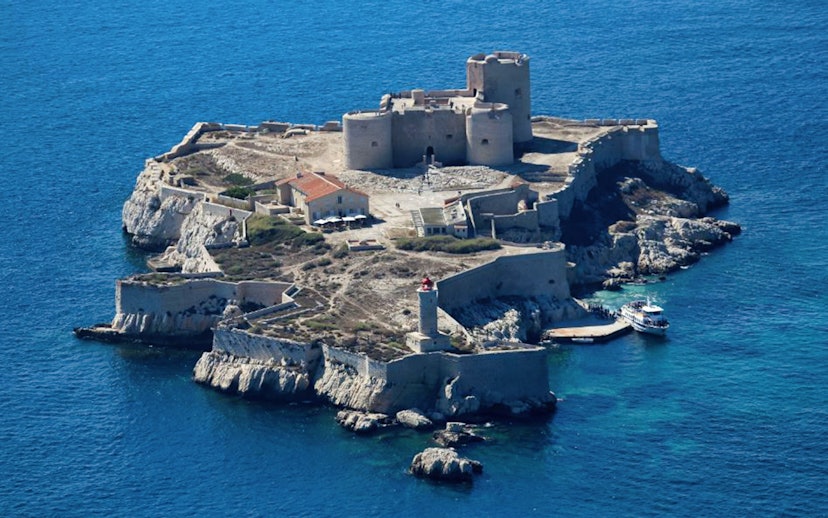
Château d’If is a small island fortress best known as the prison that inspired The Count of Monte Cristo. The visit itself is short, but getting it right depends more on ferry timing and weather than most people expect. Inside, you’ll move through bare cells, steep stairs, and exposed terraces rather than a furnished castle, so the payoff is atmosphere, views, and story. This guide covers the ferry, timing, route, and the parts worth slowing down for.
Quick overview: Château d’If at a glance
This is an easy half-day from Marseille if you plan around the boat, not just the monument.
- When to visit: Château d’If is typically open daily with longer summer hours and shorter winter hours, with Monday closures in part of the low season; the first clear-weather ferry on a weekday is noticeably calmer than late-morning summer sailings, because several boatloads can arrive together and crowd the cells at once.
- Getting in: Standard monument entry starts from €7, and you’ll also need a separate ferry crossing; Headout’s Tickets to Château d’If cover site entry, and booking ahead matters more on fine summer days when ferry lines build than in winter, when weather is the bigger variable.
- How long to allow: Allow 1.5–2 hours on the island for most visits, or closer to 3 hours total once you include the boat both ways and time on the terraces.
- What most people miss: The prisoners’ graffiti in the courtyard and the upper-floor pistole rooms are easy to rush past, even though they explain the real prison story better than the fictional cells alone.
- Is a guide worth it? A guide adds the most value if you care about the line between real history and Dumas’s fiction; if you mainly want the atmosphere, views, and a compact self-guided visit, the multilingual site material is enough.
Jump to what you need
🕒 Where and when to go
🗓️ How much time do you need?
🎟️ Which ticket is right for you?
🗺️ Getting around
🏰 What to see
♿ Facilities and accessibility
Where and when to go
How do you get to Château d’If?
Château d’If sits on Île d’If, about 3.5km (2.2 miles) off Marseille’s Old Port; your real access point is the Vieux-Port ferry dock in the city center, about 15 minutes from Marseille-Saint-Charles by metro and foot.
Île d’If, 13007 Marseille, France
- Ferry: Frioul–If Express from Vieux-Port → about 20 min crossing → this is the only way onto the island, and sailings can be suspended in strong wind.
- Metro: Vieux-Port station → 5-min walk to the ferry kiosks → the simplest option if you’re coming from Saint-Charles.
- Bus: Old Port and Quai du Port stops → 3–8 min walk → useful if you’re staying around Le Panier or the harbor.
- Taxi / rideshare: Drop-off near Quai des Belges → 2–5 min walk → allow extra time on sunny summer mornings when the waterfront gets congested.
Which entrance should you use?
There’s only one public entrance once you land, and the bigger mistake is usually underestimating the ferry queue before you ever reach it. By the time you’re on the island, monument entry itself is usually quick.
- Main entrance: Located just above the dock. Expect 5–15 min wait during late-morning summer arrivals, especially when several ferry loads land close together.
When is Château d’If open?
- April–September: 10am–6pm
- October–March: 10am–5pm
- Monday closure: Closed on Mondays during part of the low season
- Last entry: Usually about 45 minutes before closing, though the last ferry to the island is the limit that matters most
When is it busiest? Late mornings from June to September are the most crowded, because ferry arrivals bunch visitors into the lower cells, staircases, and terraces at the same time.
When should you actually go? Take the first clear-weather ferry on a weekday if you can, because the cells feel less cramped, the terraces are cooler, and the city views are sharper before midday haze builds.
Which Château d’If ticket is best for you
| Ticket type | What's included | Best for | Price range |
|---|---|---|---|
Tickets to Château d’If | Entry to Château d’If | A straightforward self-guided visit where you want to lock in monument access first and keep the rest of the day flexible around the ferry schedule | €7 |
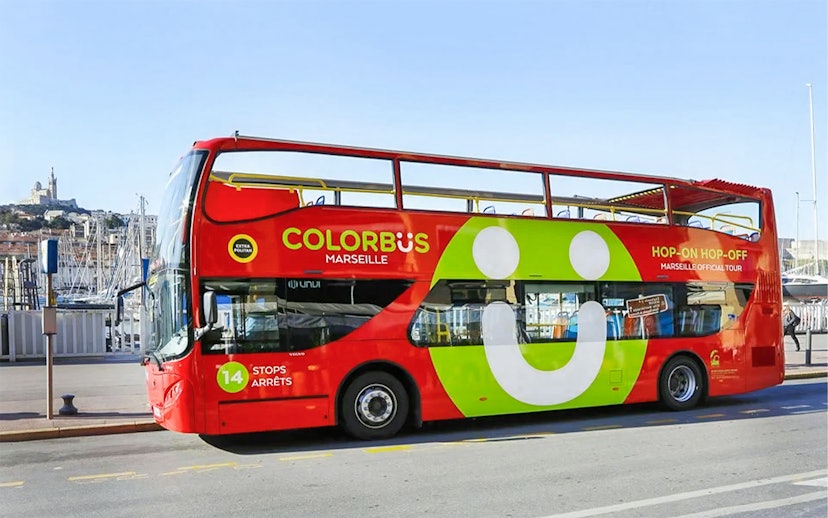
Marseille HOHO Bus Tour | 1-day hop-on hop-off bus tour with audio guide | A flexible city tour where you can cover Marseille’s major landmarks at your own pace with easy hop-on hop-off access across 14 stops | €23 |
How do you get around Château d’If?
Château d’If is best explored on foot and is small enough to cover in 1.5–2 hours, but the route is vertical enough that a loose plan helps. The main courtyard sits just beyond the entrance, with the darker prison cells below and the best sea views above.
Main areas
- Lower cells: Edmond Dantès’ cell, Abbé Faria’s cell, and the most atmospheric prison spaces → budget 20–30 min.
- Central courtyard: Historic graffiti, open-air breathing room, and the easiest place to understand the fortress layout → budget 10–15 min.
- Upper rooms: Pistole rooms and interpretation panels showing how wealth changed prison life → budget 15–20 min.
- Gun terraces: The panoramic payoff over Marseille, Frioul, and the bay → budget 20–30 min.
- Island path: Quick exterior loop for castle-against-the-sea photos → budget 10–15 min.
Suggested route: Start in the lower cells before the first busy ferry arrives, move through the courtyard and upper rooms next, and save the terraces for last; most visitors race straight upward for the view and miss the graffiti and class divide inside the prison.
Maps and navigation tools
- Map: Free site leaflet → covers the main route, cells, and terraces → pick it up at the entrance before you start climbing.
- Signage: Good enough for a self-guided visit → the site is compact, but the lower rooms make more sense if you follow the numbered route.
- Audio guide / app: There’s no on-site Audioguide → the leaflet and bilingual panels do most of the work unless you want a live guide.
- Large outdoor POIs only: Not applicable.
💡 Pro tip: Do the ground-floor cells first — once the second or third ferry arrives, those small rooms feel much tighter than the open terraces.
What is Château d’If worth visiting for?

Edmond Dantès’ cell
Attribute — Literary connection: The Count of Monte Cristo
This is the room most visitors come for, and it works because it feels convincingly stark rather than theatrical. The recreated escape opening makes Dumas’s fiction feel almost plausible in a space built for real imprisonment. What most people miss is the plaque explaining where the novel ends and the monument’s real history begins, which makes the room more interesting, not less.
Where to find it: On the dim lower level, along the main prison route shortly after you descend from the courtyard.
Abbé Faria’s cell
Attribute — Literary connection: Mentor figure from Dumas’s novel
Seen on its own, this cell is simple; seen beside Dantès’ cell, it suddenly turns into the heart of the Monte Cristo legend. The small tunnel connection between the two is the detail visitors often rush, even though it is the one feature that brings the story to life. Bring your eyes down to wall height rather than scanning the room from the doorway.
Where to find it: Immediately beside Edmond Dantès’ cell on the lower level.
Prisoners’ graffiti
Attribute — Era: 17th–19th-century prison history
The graffiti is one of the strongest reminders that Château d’If was a real prison long before it became a literary icon. Names, dates, and carved symbols survive on the stone and say more about confinement than any reconstructed display could. Most people glance up, take a photo, and move on, but the interpretive panels nearby explain who left some of these marks and why they matter.
Where to find it: Around the central courtyard walls and nearby circulation spaces.
Pistole rooms
Attribute — Prison type: Better-paid cells for wealthier prisoners
These upper-floor rooms show how unequal prison life could be even on a harsh island fortress. With more light, better ventilation, and sea views, they feel completely different from the lower cells below. Most visitors don’t linger here because the terraces are calling, but this is where the château’s social history comes through most clearly.
Where to find it: On the upper levels along the main visitor route before you step out onto the terraces.
Panoramic gun terraces
Attribute — Site feature: Fortress viewpoint
This is the visual payoff of the trip: Marseille’s skyline, the Notre-Dame de la Garde ridge, Frioul, and a full sweep of the Mediterranean. What visitors often miss is how clearly the position explains the fort’s original military purpose — from up here, the control of the harbor entrance suddenly makes sense. Go slowly around the perimeter instead of stopping at the first viewpoint.
Where to find it: At the top of the fortress, reached by the narrow staircases from the upper rooms.
Alexandre Dumas exhibition room
Attribute — Theme: Fiction versus history
This small interpretive space connects the real monument to the global fame of The Count of Monte Cristo. You’ll see how a modest prison island turned into one of Marseille’s best-known legends through film, publishing, and popular culture. Because the room is not as atmospheric as the cells, people often breeze through it, but it gives useful context that sharpens everything you’ve already seen.
Where to find it: In one of the interior exhibition rooms along the main route through the fortress.
Facilities and accessibility
- 🚻 Restrooms: Toilets are in a separate building near the dock rather than inside the fortress, so use them before you start climbing.
- 🍽️ Café / restaurant: Food on the island is limited and seasonal, so treat anything open as a convenience stop rather than a dependable lunch plan.
- 🪑 Seating / rest areas: Most breaks happen in the courtyard or on open terraces, with limited shaded seating once you leave the interior rooms.
- ♿ Mobility: This is only partially accessible because the route from the dock is uphill and much of the fortress depends on uneven stone and spiral staircases, so the upper levels are not realistic for most wheelchair users.
- 👁️ Visual impairments: The visit is challenging without a companion because the lower cells are dim, navigation relies on stairs and wall panels, and there is no on-site Audioguide.
- 🧠 Cognitive and sensory needs: The easiest visit is the first ferry on a clear weekday, when the dock, cells, and staircases are noticeably less crowded and easier to process.
- 👨👩👧 Families and strollers: Strollers can make the crossing, but a child carrier is more practical inside the fortress once the stairs and narrow passages begin.
Château d’If works well for school-age children because the boat ride, prison setting, and Monte Cristo story give them something concrete to latch onto.
- 🕐 Time: Around 1–1.5 hours on the island is realistic with younger children if you focus on the cells, the courtyard, and one full stop on the terraces.
- 🏠 Facilities: Restrooms are near the dock, not deep inside the monument, so plan that stop before the climb.
- 💡 Engagement: Treat the lower cells like a story trail — children usually engage more if you frame the visit around escape tunnels, prisoners’ marks, and lookout towers.
- 🎒 Logistics: Bring water, sun protection, and a light layer for the wind, and avoid overpacking because there’s nowhere convenient to leave bulky bags.
- 📍 After your visit: Frioul is the easiest child-friendly add-on, with more space to move around and a softer pace than the fortress itself.
Rules and restrictions
What you need to know before you go
- Entry requirement: You need monument entry plus a separate ferry crossing, and free-entry categories such as under-18s and eligible young EU visitors should bring ID.
- Bag policy: Bring only what you want to carry, because this is a stair-heavy island monument with no practical luggage storage once you arrive.
- Re-entry policy: Treat your ticket as a single visit, because leaving the island means paying and sailing back again rather than simply stepping outside for a break.
Not allowed
- 🚫 Closed areas: Some spaces can be shut for safety reasons, and barriers around cells, staircases, and edges are there because the stone surfaces are uneven and sea-exposed.
- 🖐️ Climbing and touching: Don’t climb on parapets, railings, or closed masonry, because the monument’s age and exposed position make slips and damage more likely.
Photography
Photography is one of the best reasons to come, and personal photos are generally easiest in the cells, courtyard, and terraces. The real distinction is practical rather than decorative: the lower rooms are dim, the staircases are narrow, and the roof is windy, so large setups quickly become awkward. Flash adds little in the stone interiors, and tripods or selfie sticks are a poor fit once the site gets busy.
Good to know
- The last boat to the island can matter more than the posted closing time, so missing the sailing window can kill the visit before it starts.
- Wind is the disruption to watch here; ferries can still serve Frioul while skipping Château d’If if sea conditions make docking unsafe.
Practical tips
- Booking and arrival: On clear summer days, aim to reach the Vieux-Port ferry kiosks 30–45 minutes before the boat you want, because the ferry line is usually a bigger bottleneck than the monument entrance.
- Pacing: Do the lower cells first, then the courtyard and upper rooms, and finish on the terraces; if you reverse that order, the darkest and most atmospheric rooms often feel like an afterthought.
- Crowd management: Weekday first ferries are the sweet spot here, because the cells are still quiet and the terrace views are cleaner before midday heat and haze flatten the skyline.
- What to bring or leave behind: Pack a small bag with water, sunglasses, and a light extra layer; the island is sunny, but the wind on the roof can feel much cooler than the dock in Marseille.
- Food and drink: Eat before you sail or after you return unless you’re happy with a limited seasonal island option, because this is not a site where you want lunch logistics deciding your ferry timing.
- Weather planning: If the mistral is up, check the crossing before leaving your hotel; Château d’If is one of those visits where sea conditions, not city weather, decide whether your plan works.
- Make it a better half-day: If you’ve finished the fortress in under 2 hours, continue onward to Frioul on the same circuit rather than rushing straight back to Marseille.
What else is worth visiting nearby?
Commonly paired: Frioul Islands
Distance: 10 min by ferry from Château d’If
Why people combine them: It’s the most natural pairing because the same island circuit lets you follow a history-heavy stop with beaches, walking trails, and a slower afternoon pace.
Commonly paired: MuCEM
Distance: About 1.6km (1 mile) — 20-min walk from the Vieux-Port ferry area once you’re back on the mainland
Why people combine them: Both sites make more sense together if you want a Marseille day built around sea history, fortifications, and big waterfront views rather than just checking off one landmark.
Also nearby
Fort Saint-Jean
Distance: About 1.4km (0.9 miles) — 18-min walk from the ferry docks
Worth knowing: It’s free to wander, beautifully positioned above the harbor, and the easiest way to extend the maritime-fortress mood of Château d’If without another ticketed island crossing.
Le Panier
Distance: About 900m (0.6 miles) — 12-min walk from the ferry docks
Worth knowing: Marseille’s oldest quarter works well after the island because it swaps bare prison stone for small lanes, shaded squares, and a much easier lunch stop.
Eat, shop and stay near Château d’If
- On-site: Island food options are limited and seasonal, so anything open is best treated as a convenience stop rather than a lunch plan.
- Vieux-Port cafés: 2–5 min walk, around Quai des Belges; best for coffee, pastries, and a quick breakfast before the first ferry.
- Quai du Port seafood restaurants: 5–10 min walk, north side of the Old Port; better for a full sit-down meal after your return, especially if you want harbor views with lunch.
- Le Panier bistros: 10–15 min walk, uphill from the port; a stronger choice if you want something calmer and less ferry-focused once the crossing is behind you.
- 💡 Pro tip: Eat before a late-morning sailing if you can — food is the part of the island experience visitors overestimate most often.
- Vieux-Port souvenir stalls: Quick postcards, Marseille soaps, and easy harbor keepsakes if you want something simple without a detour.
- Le Panier artisan shops: Better for ceramics, local design pieces, and gifts that feel more Marseille-specific than dockside souvenirs.
Staying around the Old Port works very well for Château d’If because you can walk to the ferry and still be close to restaurants, transit, and Marseille’s other big sights. The trade-off is price and noise, especially in rooms facing the harbor. For a short city break, though, it’s still the most practical base.
- Price point: The Old Port skews mid-range to expensive, with the best-value stays usually a few streets back from the water.
- Best for: Short-stay visitors who want to walk to the ferry and keep Marseille logistics simple.
- Consider instead: Le Panier if you want more character close by, or Castellane and Cours Julien if you want a livelier local base with easier prices for longer stays.
Frequently asked questions about visiting Château d’If
Most visitors spend 1.5–2 hours on the island, and about 3 hours total once you include the boat both ways. If you linger for photos, join a guided talk, or continue on to Frioul afterward, it can stretch comfortably into a half-day.
You usually don’t need to book far ahead, but booking before a fine summer day does remove one piece of friction. The real pressure point is often the ferry queue at the Old Port rather than the monument selling out, so spontaneous visits work best outside peak summer weekends.
Arrive 30–45 minutes before the ferry you want, even though the monument itself is not a heavily timed-entry attraction. That buffer matters most on sunny mornings in June–September, when the line at the harbor kiosks can be longer than the line at the island gate.
Yes, but keep it small and light. Château d’If is a short, stair-heavy visit with no practical luggage storage, and a bulky backpack quickly becomes annoying in the lower cells, narrow staircases, and exposed terraces.
Yes, personal photography is one of the best parts of the visit. The cells, courtyard, and roof terraces are all photogenic, but low light below and strong wind above mean simple handheld photos work better than bulky equipment.
Yes, and it works well for groups because the monument is compact and easy to cover in under 2 hours. The main thing to manage is the ferry, since a large group should not assume everyone can buy tickets and board at the last minute on a busy summer morning.
Yes, especially for children who enjoy boats, forts, and story-driven places. The crossing is short, the island is small, and the Monte Cristo angle gives the cells a narrative hook, but the site is exposed, stair-heavy, and better suited to a focused visit than an all-day family base.
Only partly, and most visitors using a wheelchair will find the full route difficult. The island approach, uneven stone, and spiral stairs make the upper levels and many highlights hard to reach, so this is not a monument where full step-free access should be expected.
Yes, but the reliable food is near the Old Port rather than inside the monument. Island options are limited and seasonal, so most visitors are better off eating before they sail or waiting until they return to Marseille.
Yes, and it’s one of the smartest ways to use the ferry. Château d’If gives you the history and views in 1.5–2 hours, while Frioul adds beaches, walking, and a more relaxed afternoon without requiring a separate full travel day.
Strong wind can cancel or reroute sailings, even when Marseille itself seems fine. The most important check is not the city forecast but the sea crossing status, because ferries may still serve Frioul while skipping Château d’If if docking conditions are rough.
Yes, as long as you want a real island fortress rather than a furnished castle. The Dumas connection adds charm, but the stronger reasons to go are the sea crossing, the preserved prison atmosphere, and the panoramic views back toward Marseille.