How to visit Cosquer Cave Marseille
Cosquer Cave is a full-scale replica of Marseille’s submerged prehistoric sea cave, best known for bringing more than 400 Ice Age artworks within reach of regular visitors. The visit is easier than it sounds physically, but it feels more structured than a typical museum because everything revolves around a timed 35-minute vehicle ride. The biggest mistake is treating the ride as the whole experience and rushing out. This guide helps you plan your slot, tickets, timing, and route.
Quick overview: Cosquer Cave at a glance
If you’re deciding whether Cosquer Cave fits your Marseille plan, these are the details that make the biggest difference.
- When to visit: Daily schedules vary by season, but the first slot of the day or the last two slots on a weekday feel noticeably calmer than late morning in July and August, when families and same-day waterfront visitors bunch up around J4.
- Getting in: From €19 for standard entry, and Headout also offers a combo that adds Mucem and a Marseille audio tour; book ahead for summer mornings, rainy days, and school-holiday weekends.
- How long to allow: 1.5–2 hours works for most visitors, and it stretches closer to 2.5 hours if you slow down in the Mediterranean Gallery or pair the visit with Mucem.
- What most people miss: The life-size Ice Age animal gallery and the handprint-heavy sections after the main ride add far more context than most visitors expect.
- Is a guide worth it? For most visitors, no — the included audio guide is well integrated into the ride, and a live guide matters less here than choosing a good time slot.
🎟️ Morning slots for Cosquer Cave can disappear 1–3 days ahead during July, August, and school holidays. Lock in your visit before the time you want is gone. See ticket options
Jump to what you need
🕒 Where and when to go
🗓️ How much time do you need?
🎟️ Which ticket is right for you?
🦣 What happens inside
♿ Facilities and accessibility
Where and when to go
How do you get to Cosquer Cave?
Cosquer Cave sits on Marseille’s J4 waterfront beside Mucem, about a 10-minute walk from Vieux-Port and an easy add-on to a day in Le Panier or around the harbor.
Villa Méditerranée, Promenade Robert Laffont, Esp. J4, 13002 Marseille, France
- Metro: Vieux-Port station → 10-minute walk → follow the harbor west toward Mucem and Esplanade J4.
- Walk: From Le Panier or Fort Saint-Jean → 10–15 minutes → the waterfront route is straightforward and scenic.
- Taxi / rideshare: Drop-off at Esplanade J4 → 1–2-minute walk → ask for Villa Méditerranée rather than Mucem.
- Drive: Nearby parking garages around Joliette and J4 → 5–10-minute walk → waterfront parking is easiest before late morning.
Which entrance should you use?
There is one main entrance, but first-time visitors often lose time by queueing at Mucem or heading to the wrong building because the two attractions sit side by side.
- Main entrance: Located at Villa Méditerranée on Promenade Robert Laffont, Esp. J4. Expect a 5–15-minute wait during late-morning summer slots.
When is Cosquer Cave open?
- Daily schedule: Opening and closing times vary through the year, so choose from the live timed-entry calendar rather than assuming fixed museum hours.
- Timed entry: Visits run in scheduled slots through the day.
- Last entry: The final departure changes by date and season.
When is it busiest? Late morning on weekends, rainy days, and throughout July and August feels the most compressed because timed cave departures fill while the J4 waterfront gets busier.
When should you actually go? The first slot of the day or a late-afternoon weekday visit gives you a smoother check-in and more breathing room in the galleries after the ride.
How much time do you need?
| Visit type | Route | Duration | Walking distance | What you get |
|---|---|---|---|---|
Highlights only | Check-in → cave ride → quick gallery look → exit | 1–1.5 hrs | ~1 km | You get the core cave ride and a fast look at the exhibits, but you will rush the animal gallery and miss much of the context that makes the visit click. |
Balanced visit | Check-in → cave ride → Mediterranean Gallery → discovery exhibits → exit | 1.5–2 hrs | ~1.5 km | You get the full Cosquer Cave experience most visitors actually want, including the ride, the life-size Ice Age animals, and the discovery story without feeling hurried. |
Full exploration | Check-in → cave ride → full post-ride galleries → café or pause → nearby Mucem add-on | 2.5+ hrs | ~2 km+ | You get time to slow down in the post-ride galleries and pair Cosquer with the waterfront area, but this only makes sense if you want a half-day cultural plan rather than a quick stop. |
Which Cosquer Cave ticket is best for you
| Ticket type | What's included | Best for | Price range |
|---|---|---|---|
Cosquer Cave Entry Ticket + City Tour With Audio Guide | Entry ticket to Cosquer Cave + audio guide in French, English, German, Dutch, Spanish, and Italian + Marseille self-guided city tour app in English | A straightforward cave visit where you want the main experience booked and a flexible city add-on for before or after your slot. | €24 |
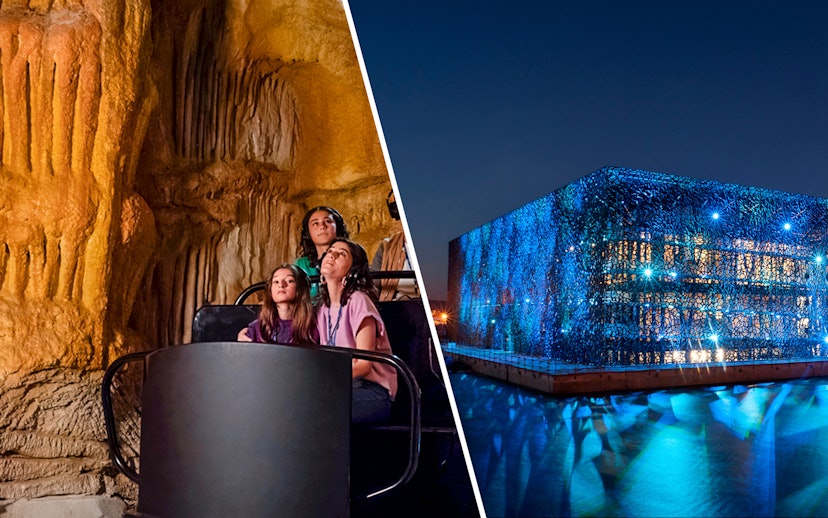
Combo (Save 5%): Mucem Entry + Cosquer Cave & Marseille Tour with Audio Guides | Skip-the-line tickets to Mucem Museum + access to all exhibitions + entry ticket to Cosquer Cave + Cosquer audio guide in 6 languages + Marseille self-guided city tour app in English | A same-day Marseille plan where you want 2 major waterfront attractions without buying separate entries. | €35 |
How do you get around Cosquer Cave?
Layout and route
Cosquer Cave is spread across 3 levels, but the visit is more linear than sprawling because the timed cave ride anchors everything. In practice, that means it’s easy to follow once you’re inside, but easy to shortchange the post-ride galleries if you leave too quickly.
- Entry and descent level: Check-in, orientation, and descent by elevator → budget 10–15 minutes before your timed departure.
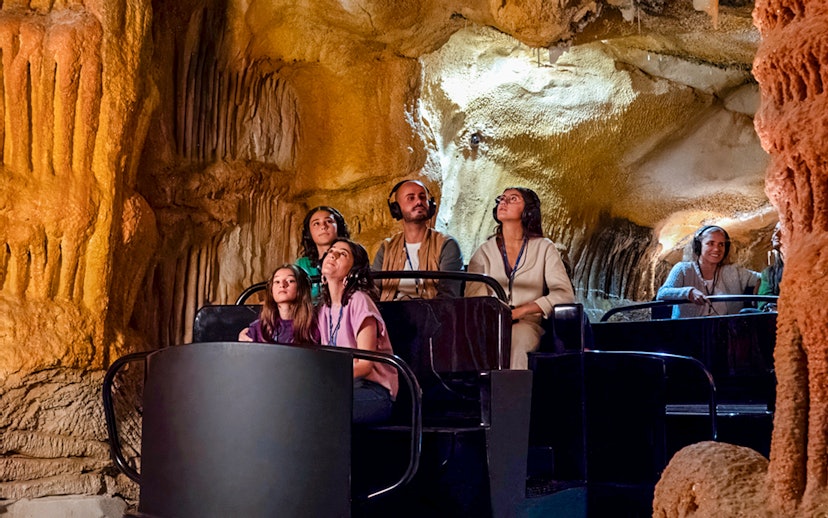
- Cave ride level: Six-seat exploration vehicles and the main replica cave route → budget about 35 minutes.
- Mediterranean Gallery and exhibits: Discovery story, prehistoric context, and full-scale Ice Age animals → budget 30–45 minutes.
Suggested route: Arrive early enough to settle in, take the cave ride first as scheduled, then give the gallery a proper final loop — most visitors remember the ride, but the animal reconstructions and discovery material are what make the art make sense.
Maps and navigation tools
- Map: The route is mostly fixed by timed entry → it covers the ride and follow-on galleries → ask at the entrance desk for orientation before you go downstairs.
- Signage: Wayfinding is good for the main route, but it’s still easy to miss the gallery finale if you follow the crowd straight toward the exit.
- Audio guide / app: The included cave audio guide is available in 6 languages and adds real value because the vehicle stops are synchronized to the commentary.
💡 Pro tip: Stay for the full gallery loop after the cave ride — that’s where the handprints, animal context, and discovery story stop feeling like side exhibits and start tying the whole visit together.
What happens inside Cosquer Cave?

Exploration vehicle ride
Ride type: Six-seat guided exploration vehicle
This is the centerpiece of the visit: a slow, 35-minute ride through the replica cave in near-darkness, with stops timed to the audio guide. It feels immersive without being physically demanding, and the lighting and narration pull your eye to details many visitors would miss on foot.
Where to find it: After check-in and the descent, this is the first major part of the route on the cave level.
Marine animal engravings
Era: Paleolithic cave art
Cosquer stands out because it includes marine imagery that almost never appears in other prehistoric cave sites. Look for the great auks, seals, fish, and coastal signs that make this cave feel tied to the Mediterranean rather than an inland hunting world.
Where to find it: Along the main cave route, highlighted during the audio-guided vehicle sequence.
Handprint galleries
Attribute: Prehistoric hand stencils and prints
The handprints are some of the most affecting parts of the visit because they collapse the time gap more directly than the animal figures do. Many visitors remember the animals first, but the clustered hand stencils are what tend to stay with them afterward.
Where to find it: In the chambers leading toward the larger central cave sections on the ride route.
The Grand Shaft atmosphere
Attribute: Cave formation and spatial drama
This section gives the replica some of its strongest sense of scale, depth, and danger, which matters because the original cave is partially submerged and inaccessible. What gets missed here is the way the handprints and rock forms work together, not just the individual artworks.
Where to find it: Midway through the vehicle route, where the cave opens into a larger-volume chamber.
Mediterranean Gallery of Ice Age fauna
Attribute: Species reconstructions
After the ride, this gallery grounds the cave art in real bodies and scale by recreating 11 Ice Age animals at life size. Many visitors cut this short because they think the visit peaked on the ride, but this is where the broader story clicks into place.
Where to find it: After you exit the cave ride, in the main post-visit exhibition gallery.
Discovery and interpretation exhibits
Attribute: Archaeology and discovery story
These exhibits explain how diver Henri Cosquer discovered the original cave and why the replica exists at all. Without this section, the cave can feel like a beautiful reconstruction; with it, you understand the original site’s underwater reality and the engineering behind the public experience.
Where to find it: Across the post-ride exhibition spaces on the upper levels.
Facilities and accessibility
- 🎒 Lockers: Lockers are available on-site, which helps if you’re carrying more than you want to manage during a timed indoor route.
- 🚻 Restrooms: Restrooms are available on-site, and it’s worth using them before your cave departure rather than right after check-in.
- 🍽️ Café: Cosquer has an on-site café with a sea-view terrace, and it works best as a post-visit break rather than a meal stop squeezed in before your slot.
- 🛍️ Gift shop / merchandise: The boutique sells themed books and souvenirs, and it is one of the better places to pick up something specific to the cave rather than generic Marseille merchandise.
- 🪑 Seating / rest areas: The cave ride itself is seated, which makes the main experience comfortable even for visitors who do not want a long standing visit.
- ♿ Mobility: The building is accessible by elevator, but the standard moving cave ride is not wheelchair-accessible, so ask staff about the alternative exploration cabin before your slot.
- 👁️ Visual impairments: Guide dogs are allowed, and the included audio guide helps with interpretation, but this remains a highly visual experience.
- 🧠 Cognitive and sensory needs: The cave route is dim, enclosed, and sound-led, so visitors who dislike semi-dark spaces or timed movement should ask about the alternative experience on arrival.
- 👨👩👧 Families and strollers: Prams and strollers cannot join the cave tour, so families with very young children should plan on a baby carrier or split the visit.
Cosquer Cave works well for school-age children because the ride format is engaging and the animals give them something concrete to latch onto beyond the cave walls.
- 🕐 Time: Around 1.5 hours is realistic with children, and the cave ride plus the animal gallery are the parts most worth prioritizing.
- 🏠 Facilities: The seated ride, restrooms, café, and on-site lockers make the visit easier than many archaeology attractions for families.
- 💡 Engagement: Use the animal gallery after the ride to turn the cave art into a spotting game — children usually respond faster to the great auks, lions, and bison than to the abstract signs.
- 🎒 Logistics: Bring as little as you can carry comfortably, skip the stroller, and choose an early or late slot so the galleries feel less compressed.
- 📍 After your visit: The J4 waterfront and the walk toward Mucem and Fort Saint-Jean are the easiest nearby spots to let children move around after an indoor visit.
Rules and restrictions
What you need to know before you go
- Entry requirement: Timed-entry tickets are the norm here, and arriving 15–20 minutes early gives you the best chance of a smooth check-in.
- Bag policy: Small bags are easiest for this visit, and anything bulky is better left in the on-site lockers before you join your departure.
- Re-entry policy: Not applicable.
Not allowed
- 🐾 Pets: Pets are not allowed on the cave route, but service animals are permitted.
- 👶 Prams and strollers: Strollers cannot go into the cave experience, so families with very young children need to plan around that before arrival.
- 🚼 Minimum age: Children under 3 cannot take the cave tour.
Photography
Photography is the rule that catches people out most often here because the cave experience itself is the part visitors most want to capture. Treat the ride and cave environment as no-photo spaces unless staff clearly indicate otherwise, and assume flash, tripods, and selfie sticks are off-limits in the immersive sections.
Good to know
- Alternative experience: If you use a wheelchair or know enclosed ride vehicles are a problem for you, ask about the exploration cabin before boarding starts.
- Visit flow: This is not a wander-at-will museum first — the timed vehicle departure shapes the whole visit, so late arrivals feel the squeeze more quickly here than at most galleries.
Practical tips
- Booking and arrival: Book 1–3 days ahead for July, August, rainy weekends, and school-holiday afternoons, and aim to arrive 15–20 minutes early because the cave departures run in set waves rather than loose museum entry.
- Pacing: Don’t blow all your attention on the first few panels of the ride — save some focus for the handprints and then the Mediterranean Gallery afterward, which is where the visit stops feeling like a spectacle and starts feeling coherent.
- Crowd management: The first slot and late-afternoon weekdays are the sweet spots here because the late-morning stretch picks up visitors pairing Cosquer with Mucem or general Old Port sightseeing.
- What to bring or leave behind: Bring a small bag and leave the stroller if you can, because the cave route is structured, timed, and easier when you are not managing extra gear.
- Food and drink: Eat either well before your slot or after the visit, since the 35-minute ride plus gallery flow is awkward to interrupt and the on-site café is better as a reset than a rushed pre-entry stop.
What else is worth visiting nearby?
Commonly paired: Mucem
Distance: 100 m — 2-minute walk
Why people combine them: They sit side by side on the J4 waterfront, and the pairing works because Cosquer gives you a compact timed experience while Mucem lets you wander at your own pace afterward.
✨ Cosquer Cave and Mucem are most commonly visited together — and simplest to do on a combo ticket. The combo cuts out separate booking steps and makes it easier to lock both attractions into one waterfront day. → See combo options
Commonly paired: Fort Saint-Jean
Distance: 300 m — 5-minute walk
Why people combine them: It is the easiest open-air follow-up after a dark indoor visit, with harbor views, historic ramparts, and a route that connects naturally from the J4 museum area.
Also nearby
La Major Cathedral
Distance: 650 m — 9-minute walk
Worth knowing: It is a calm architectural stop if you want something quieter between J4 and Le Panier.
Le Panier
Distance: 900 m — 12-minute walk
Worth knowing: Marseille’s old quarter works best after Cosquer if you want cafés, street views, and a less structured second half to your day.
Eat, shop and stay near Cosquer Cave
- On-site: Cosquer’s on-site café has a sea-view terrace and works best as a convenient post-visit coffee or light bite rather than a destination meal.
- Better options nearby: The J4 waterfront and nearby Vieux-Port area usually give you stronger meal choices once you are done with the timed visit window.
- Pro tip: Take the earliest slot you can manage, then eat afterward on the waterfront — the visit is easier when you are not trying to squeeze food into a timed entry window.
- Cosquer boutique: The on-site shop is the most relevant place to buy prehistoric art books, cave-themed souvenirs, and gifts tied directly to the experience.
Staying around J4 and the Joliette waterfront is convenient if Cosquer Cave and Mucem are high on your list, and it makes for an easy short-stay base with modern hotels and direct access to the harbor side. It is less atmospheric at night than the Vieux-Port area, though, so it works better for convenience than for classic Marseille character. If Cosquer is just one stop in a wider trip, many visitors will prefer to stay a little closer to the old port and walk in.
- Price point: The immediate area skews mid-range to upscale, with newer waterfront hotels more common than bargain stays.
- Best for: Short trips where you want to walk to Cosquer Cave, Mucem, and the harbor without dealing with transit.
- Consider instead: Vieux-Port or Le Panier are usually better fits if you want more restaurants, more atmosphere, and easier evening plans after sightseeing.
Frequently asked questions about visiting Cosquer Cave
Most visits take 1.5–2 hours. The cave ride itself lasts about 35 minutes, and the rest of the time usually goes to the discovery exhibits and the Mediterranean Gallery, which many visitors underestimate before they arrive.
Yes, booking ahead is the safer move for summer, weekends, and school holidays. Same-day tickets are often easier to find in quieter months, but the most convenient morning and midday slots can still disappear first.
Arriving 15–20 minutes early is the right buffer for most visits. That gives you time to check in, store anything you do not want to carry, and get to the departure area without starting the experience feeling rushed.
Yes, but smaller is better. This is a timed, indoor visit with a structured route, so a compact bag is easier to manage, and anything bulky is best left in the on-site lockers before your cave departure.
Not in the cave experience itself, which is the part most visitors care about. If staff allow casual photos in outer exhibition areas, keep expectations modest and assume flash, tripods, and selfie sticks are not allowed in the immersive sections.
Yes, groups can visit, and the format works well because the route is structured and audio-led. It is a particularly good fit for school groups and culture-focused groups who want a shared experience without needing a live guide throughout.
Yes, it suits most families well, especially with school-age children. The seated ride, dramatic setting, and animal reconstructions hold attention better than a standard archaeology museum, but children under 3 cannot take the cave tour.
Partly. The building itself is accessible by elevator, but the standard moving cave ride is not wheelchair-accessible, so visitors should ask staff about the alternative exploration cabin before their timed departure.
Yes, there is an on-site café. It is best treated as a post-visit stop because the timed cave departure makes pre-visit food breaks harder to fit in neatly.
No, children under 3 cannot take the cave tour. That is one of the most important rules to check before booking, especially if you are planning a family visit with a stroller or baby carrier.
It can feel enclosed for some visitors because the ride is dim, cave-like, and tightly choreographed. Most people find it immersive rather than frightening, but if enclosed spaces are a problem for you, ask about the alternative exploration option on arrival.
Yes, and it is one of the easiest same-day pairings in Marseille. The 2 venues sit next to each other on the J4 waterfront, and the combination works especially well because Cosquer is timed and compact while Mucem is more flexible.