Orange Vélodrome visitor guide for Marseille
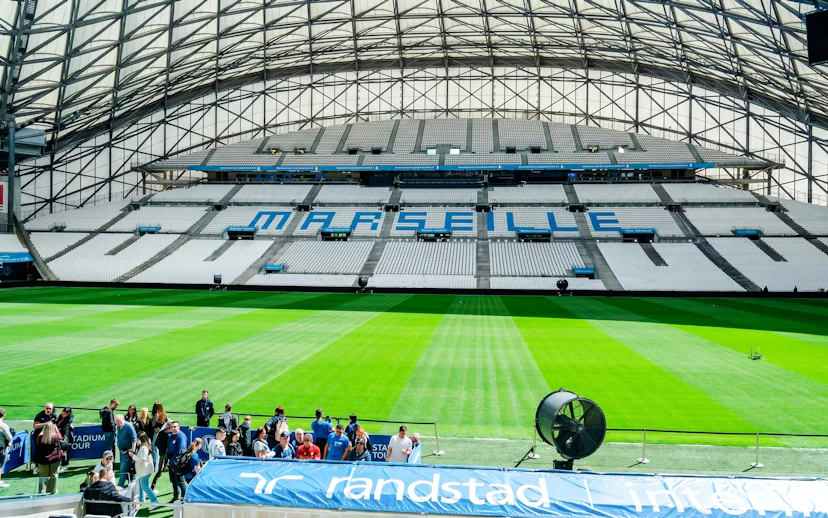
Orange Vélodrome is Olympique de Marseille’s home stadium, best known for OM’s matchday atmosphere, its sweeping white roof, and France’s only Champions League-winning club trophy on display inside. The visit is straightforward rather than huge, but it pays to know what kind of experience you’re booking: the standard tour is self-guided, not a live guided walk, and the best stops come late in the route. This guide covers timings, entrance details, tickets, and how to plan your visit without wasted time.
Quick overview: Orange Vélodrome at a glance
If you want the short version before you book, this is what actually changes the visit.
- When to visit: Monday–Sunday, 10am–12 noon and 1:30pm–5pm on non-event days. Weekday slots around 3:30pm are noticeably calmer than late mornings and the 1:30pm reopening rush, because school groups and just-arrived visitors tend to bunch earlier.
- Getting in: From €21 for standard entry. City combos start in the low €30s, and booking ahead matters less on quiet weekdays than during school holidays and any week when OM fixtures or concerts block tour dates.
- How long to allow: 60–90 minutes for most visitors. It stretches closer to 2 hours if you read the history panels properly and spend time in the OM Boutique afterward.
- What most people miss: The History Room gets rushed because everyone wants the tunnel first, and the best inside view of the roofline usually comes when you pause in the upper seating bowl rather than hurrying straight down.
- Is a guide worth it? Usually no, because the route is short and linear, but non-French speakers should know the visit relies on panels and light QR content rather than a strong live explanation.
🎟️ Tour slots for Orange Vélodrome get squeezed first on school-holiday weekends and around OM home fixtures. Lock in your visit before the date you want is blocked by the event calendar.
Jump to what you need
🕒 Where and when to go
🗓️ How much time do you need?
🎟️ Which ticket is right for you?
🗺️ Getting around
⚽ What to see
♿ Facilities and accessibility
Where and when to go
How do you get to Orange Vélodrome?
Orange Vélodrome is in Marseille’s Saint-Giniez district in the 8th arrondissement, about 3.5 km (2.2 mi) south of the Vieux-Port and easiest to reach by Metro Line 2.
3 Boulevard Michelet, 13008 Marseille, France
- Metro: Rond-Point du Prado (Line 2) → 5-min walk → best stop for Gate 18 and the Jean Bouin forecourt.
- Metro: Sainte-Marguerite Dromel (Line 2) → 10–12-min walk → better on matchdays if you’re heading to Ganay or Virage Sud.
- Tram: T3 to Sainte-Marguerite Dromel → 10–12-min walk → useful if you’re already moving through south Marseille.
- Bus: Route 83 from Vieux-Port → slower but direct → handy only if you want to avoid a metro change.
- Taxi / rideshare: Drop-off on Boulevard Michelet near Jean Bouin → easiest with kids or limited mobility, but slower after major events.
Which entrance should you use?
- On tour days, the setup is simpler than many visitors expect: there is one correct tour entrance, and the main mistake is waiting at a general stadium gate instead of the Jean Bouin forecourt.
- Located at Gate 18 on the Jean Bouin forecourt. Expect 0–5 minutes wait on normal tour days, with slightly slower entry just after 1:30pm and during spring school-group periods.
When is Orange Vélodrome open?
- Monday–Sunday: 10am–12 noon
- Monday–Sunday: 1:30pm–5pm
- Match and event days: Closed to tour visitors
- Last entry: 5pm
When is it busiest? Late mornings, the 1:30pm reopening window, and April–June school-trip periods feel busiest, because the route is short and groups stack up quickly in the dressing room and tunnel sections.
When should you actually go? Weekdays from about 3:30pm to 4:30pm are usually easiest, because the midday restart crowd has passed and you can linger in the Presidential Lounge without being moved along.
How much time do you need?
| Visit type | Route | Duration | Walking distance | What you get |
|---|---|---|---|---|
Highlights only | Gate 18 → History Room → press room → players’ tunnel → dugout → Presidential Lounge → exit | 45–60 min | ~0.5 km | You hit the big photo stops and the 1993 trophy, but you’ll skim the context and spend very little time in the dressing-room areas. |
Balanced visit | Gate 18 → full self-guided route through history areas, VIP spaces, press room, tunnel, dressing room, mixed zone, dugout, trophy room, and Presidential Lounge | 60–90 min | ~0.8 km | This is the best fit for most visitors, and it gives you the full stadium-tour experience without feeling rushed. |
Full exploration | Full route → slow read of the panels → extra time in the bowl and Presidential Lounge → OM Boutique afterward | 1.5–2 hr | ~1 km | You get the full circuit plus time to notice the roofline, OM history, and the details most people skip, but it is still a compact visit rather than a half-day site. |
Which Orange Vélodrome ticket is best for you
| Ticket type | What's included | Best for | Price range |
|---|---|---|---|
OM Stadium Tour at the Orange Vélodrome | Timed entry + self-guided route + History Room + VIP boxes + press room + players’ tunnel + home dressing room + dugout + Presidential Lounge | A non-matchday visit where you want the classic behind-the-scenes route and OM’s 1993 Champions League trophy without turning it into a full-day plan. | From €20 |
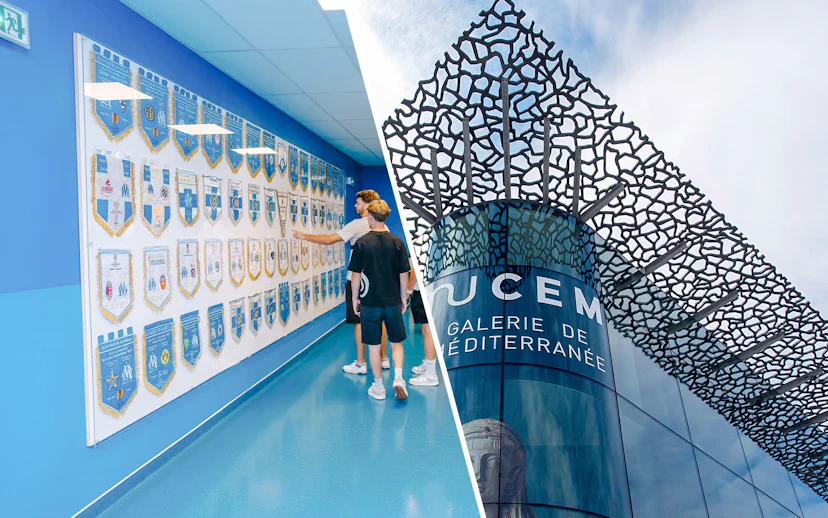
Orange Vélodrome Stadium Tour + MUCEM | Stadium tour + MUCEM entry | A Marseille day where the stadium alone would feel short and you want a second stop with stronger museum depth afterward. | |
Orange Vélodrome Stadium Tour + Colorbüs Marseille | Stadium tour + Hop-On Hop-Off bus | A city-first itinerary where you want transport between major sights and one timed stadium visit folded into the day. | |
OM match ticket | Match seat only | A trip built around noise, chants, and the Virage atmosphere rather than dressing rooms, tunnel access, and trophy photos. | |
Concert ticket | Event seat or standing area | A visit focused on the venue as a live-music arena, where seat choice and entry logistics matter more than stadium history. |
How do you get around Orange Vélodrome?
Stadium layout
Orange Vélodrome is best explored on foot, and the standard tour is compact enough to cover in 60–90 minutes without needing a complicated route. The visit starts on the Jean Bouin side, and the main reveal of the bowl comes after you move down toward the tunnel and dugout.
- Gate 18 / Jean Bouin forecourt → ticket check and History Room → allow 10–15 minutes.
- VIP boxes and press room → executive seating and OM-branded media backdrop → allow 10–15 minutes.
- Players’ tunnel and dugout → the best pitch-level photo stop on the route → allow 15–20 minutes.
- Dressing room, mixed zone, and Presidential Lounge → backstage spaces and the 1993 trophy → allow 20–30 minutes.
Suggested route: don’t sprint to the dugout first, because the route’s emotional payoff works better if you keep the tunnel, bench, and trophy in the order the stadium sets up.
Maps and navigation tools
- Map: A detailed map usually isn’t necessary → the route is largely linear → your booking confirmation and the on-site flow are enough before arrival.
- Signage: Wayfinding is good once you’re inside → most confusion happens outside, between the metro exit, Jean Bouin forecourt, and Gate 18.
- Audio guide / app: QR-style content appears on parts of the route, but don’t count on a strong full audioguide → English support exists, though French interpretation is usually fuller.
💡 Pro tip: The easiest navigation mistake is outside, not inside — use Rond-Point du Prado for the tour entrance, or you may waste 10–15 minutes circling the stadium in the sun.
What happens inside Orange Vélodrome?

Players’ tunnel
Ride type: Backstage access route
This is the most cinematic part of the tour, because it is the one space that still feels charged even when the stadium is empty. You move from the more ordinary indoor rooms into the slope that leads to the pitch, and that change in atmosphere lands well if you haven’t rushed ahead. Most people photograph the exit, but the better detail is the OM branding and sponsor wall just before the light opens up.
Where to find it: After the press room, on the descent from the west side of the stadium toward pitch level.
Substitutes’ bench
Attribute — Stadium access level: Pitch-side viewpoint
The dugout is the stop everyone imagines when they book, and it usually delivers because it puts you at player-eye height without the chaos of a matchday crowd. This is where the bowl, roof, and Virage ends make the most sense together. What visitors often miss is that you are not on the grass, so it’s worth taking one wide photo and one upward shot into the stands before moving on.
Where to find it: At the end of the players’ tunnel route on the west touchline, beside the dugout.
Presidential Lounge and the 1993 trophy
Attribute — Era: 1993 European Cup / modern OM history
This is the emotional center of the tour, because OM’s Champions League trophy is still the club object most visitors care about seeing. Even people who aren’t OM supporters usually pause here longer than they expect. Many visitors rush it because it comes late in the circuit, but the detail to notice is the engraving and how modest the surrounding display feels compared with bigger European club museums.
Where to find it: Near the end of the route in the Presidential Lounge on the main-stand side.
Home dressing room
Attribute — Space type: Team area
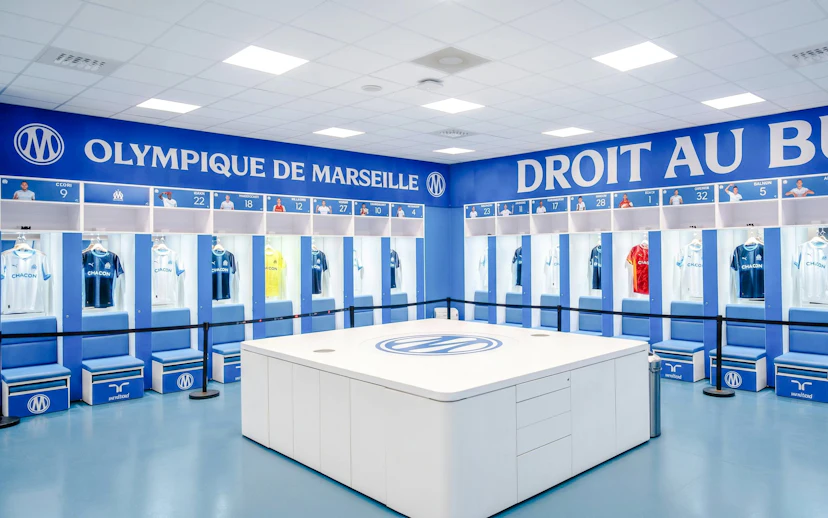
The dressing room is less theatrical than the tunnel, but it gives the clearest sense of how close the visit gets to actual working spaces. It is one of the stops where school groups can slow the route, so timing matters more here than elsewhere. Most visitors aim straight for the central photo, but the better angle is from the doorway, where you can take in the full layout without getting boxed in.
Where to find it: After the mixed zone on the lower west side of the tour circuit.
Press conference room
Attribute — Space type: Media room
This stop is simple, but it works because it lets you step into a room you’ve probably seen in clips after OM matches. It also breaks up the route nicely before the tunnel. Most people use it as a quick novelty photo, though it is worth noticing how small and functional it feels in person compared with how it reads on television.
Where to find it: Mid-route, before the players’ tunnel and pitch-side section.
Facilities and accessibility
- 🎒 Cloakroom / lockers: Small lockers are available, but bags over 25 x 25 cm (10 x 10 in) are not allowed inside the tour, so it pays to travel light.
- 🚻 Restrooms: Bathrooms are available on the route, though event-day visitors regularly complain that some are slow to reach from upper stands.
- 🍽️ Food and drink: There is no real food stop on the tour itself, and on match or concert days the in-stadium kiosks are more convenience than value.
- 🛍️ Gift shop / merchandise: The OM Boutique on the forecourt is the best place for shirts, scarves, and kids’ kits, but prices are standard club-store prices rather than bargains.
- ♿ Mobility: The tour route uses lifts, but matchday access varies by stand and the stadium still has steep stairs and long approaches that can be awkward without advance planning.
- 👁️ Visual impairments: The visit relies heavily on wall panels and visual wayfinding, so anyone who needs strong audio support should contact the venue before arrival.
- 🧠 Cognitive and sensory needs: Non-event weekdays, especially after 3:30pm, are the calmest way to visit, while matchdays and concerts are loud, crowded, and scanner-heavy.
- 👨👩👧 Families and strollers: School-age kids usually handle the route well, but strollers are not allowed, so a carrier is the better option for toddlers.
Orange Vélodrome works best with kids who like football, big spaces, and behind-the-scenes rooms, because the route is short enough to hold attention but not interactive enough for very young children.
- 🕐 Time: 60–75 minutes is realistic with children, and the tunnel, dugout, and dressing room are the sections most worth prioritizing.
- 🏠 Facilities: Restrooms and the OM Boutique are easy wins, but there is no play area or family lounge built into the tour route.
- 💡 Engagement: Make the tunnel and bench the mission, because children usually connect more with the player-eye view than with the early history displays.
- 🎒 Logistics: Bring a very small bag, use the metro instead of driving, and avoid the 1:30pm restart if you want less waiting and less bunching.
- 📍 After your visit: Cité Radieuse is the easiest child-friendly follow-on stop nearby if they still have energy for one more short outing.
Rules and restrictions
What you need to know before you go
- Entry requirement: Bring a valid ticket for the OM Stadium Tour or your event, and keep a photo ID with you in case staff ask to verify the booking.
- Bag policy: Bags over 25 x 25 cm (10 x 10 in), strollers, glass, alcohol, and professional cameras are not allowed inside.
- Re-entry policy: The tour works as a one-way route, so once staff move you out through the exit you should not count on going back in to repeat missed rooms.
Not allowed
- 🚫 Food/drink: Outside food and alcohol are not part of the tour route, and matchday kiosks are the default once you are inside on event nights.
- 🚬 Smoking/vaping: Smoking is not permitted inside the stadium.
- 🐾 Pets: Pets are not allowed inside, while service animals should be treated as the only likely exception.
- 🖐️ Touching exhibits, climbing, or entering restricted areas: You can reach the dugout and pitch-side level, but you cannot walk on the grass or step into staff-only zones.
Photography
Photography is allowed through most of the tour, and this is one of the easier stadium visits for casual photos. The limits are practical rather than complicated: no flash, no tripods, and no professional camera setup. The key distinction to remember is that pitch-side access does not mean pitch access, so you can photograph from the bench area, but not move onto the turf for a better angle.
Good to know
- Tour access stops completely on match and event days, so the right ticket on the wrong date still gets you nowhere.
- On major event nights, your phone may be checked twice — once at the forecourt and again at the turnstile — so keep it ready.
Practical tips
- Book a late-afternoon weekday slot if you can. Around 3:30pm–4:30pm, the route is usually calmer because the 1:30pm reopening rush is over and most school groups have already passed through the dressing-room section.
- Don’t treat the visit as a 30-minute photo stop unless you truly only care about the bench. The route saves the Presidential Lounge and OM’s 1993 trophy for late in the circuit, so rushing the early rooms makes the ending land less well.
- If you are visiting for an OM match instead of the tour, arrive 90 minutes early, not 30. Reviewers regularly missed kickoff after getting trapped in the forecourt scan lines and second ticket check.
- Use the right metro stop for your goal. Rond-Point du Prado is the best stop for the tour entrance, while Sainte-Marguerite Dromel is often easier for Ganay or Virage Sud seating on matchdays.
- Bring the smallest bag you can. Anything over 25 x 25 cm is not allowed, and even on quiet days a compact bag makes the entry check faster.
- Eat before you go inside on event nights. Stadium food is one of the weakest parts of the experience for both value and queues, so a proper meal beforehand usually improves the whole night.
What else is worth visiting nearby?
Commonly paired: Cité Radieuse
Cité Radieuse
Distance: 900 m — 10–12 min walk
Why people combine them: It makes sense as a same-neighborhood pairing, and the contrast between Le Corbusier’s Marseille icon and OM’s stadium identity works surprisingly well in one afternoon.
Commonly paired: Prado Beach
Prado Beach
Distance: 2 km — 25 min walk or short bus ride
Why people combine them: It is the easiest post-tour reset if you want open air after being inside the stadium, especially on warm evenings before dinner.
Also nearby
Parc Borély
Distance: 1.7 km — 20 min walk
Worth knowing: It is a better follow-on stop than another museum if you want space, shade, and a slower pace after a short stadium visit.
Cité Radieuse rooftop area
Distance: 900 m — 10–12 min walk
Worth knowing: Even if you do not do a full architecture visit, the building is one of Marseille’s most distinctive nearby landmarks and easy to fold into the same outing.
Eat, shop and stay near Orange Vélodrome
- On-site: There is no proper food stop on the tour route, and matchday kiosks are best treated as a fallback rather than part of the plan.
- Brasserie du Stade (2-min walk, Boulevard Michelet area): French and Italian basics at mid-range prices, and the most practical pre- or post-visit option right by the forecourt.
- Le Toigou (5-min walk, Prado area): Quick Thai food at a lower price point, and a better bet than stadium concessions if you want something fast before an event.
- Vieux-Port restaurants (15–20 min by metro, Vieux-Port): Best for a proper sit-down meal if you are building the stadium into a longer Marseille day rather than eating right outside it.
- Pro tip: Eat before match or concert entry, because once the forecourt fills up you gain almost nothing by waiting to buy inside.
- OM Boutique: Official shirts, scarves, kids’ kits, and player printing on the stadium forecourt, and still the most useful shopping stop here if you want something specific to the club.
- Prado neighborhood shops: Better for practical items than souvenirs, so this area is useful if you forgot basics, but not worth detouring for shopping alone.
The stadium area is practical, safe-feeling, and well-connected, but it is not the most atmospheric base for a first Marseille trip. It works best if Orange Vélodrome is the main reason you are here, or if you want easier matchday logistics than you would get from the Old Port.
- Price point: The area tends to skew mid-range business and residential, with fewer standout budget options than around Saint-Charles.
- Best for: Short stays built around an OM match, a concert, or a next-morning departure where simple metro access matters more than nightlife.
- Consider instead: Vieux-Port or Le Panier are better for a fuller Marseille stay, while Castellane is a smart middle ground if you want easier transport without sleeping next to the stadium.
Frequently asked questions about visiting Orange Vélodrome
Most visits take 60–90 minutes. If you read the history panels carefully, linger at the dugout, and browse the OM Boutique afterward, you can turn it into a relaxed 2-hour stop, but it is still a compact visit rather than a half-day attraction.
For the standard stadium tour, booking ahead is smart but not always essential on quiet weekdays. It matters much more during school holidays and on weeks when OM fixtures or concerts remove tour dates from the calendar entirely.
Arrive 10–15 minutes early for the stadium tour. If you are going for a match or concert instead, give yourself about 90 minutes, because the forecourt scan and second ticket check are where people lose time.
You can bring only a very small bag. Anything larger than 25 x 25 cm (10 x 10 in) is not allowed, so this is not a good stop to do with luggage or a full daypack.
Yes, photos are allowed through most of the visit. The limits are no flash, no tripods, and no professional camera setup, and pitch-side access still does not mean you can step onto the grass.
Yes, groups can visit, but the experience is still self-guided rather than led by a live guide. That works well if everyone wants to move at their own pace, though spring school groups can create bottlenecks in the dressing-room and tunnel sections.
Yes, especially with children old enough to care about football or big event spaces. The route is short, the tunnel and dugout are easy wins, and the only real drawback for families is that strollers are not allowed.
Partly, yes. The tour route uses lifts, but matchday accessibility varies by stand, and some visitors with reduced mobility still report that the wider stadium setup can be awkward without planning ahead.
Yes, but the better food is usually outside rather than inside. The tour itself has no proper food stop, and event-day kiosks are widely seen as one of the stadium’s weaker points for both choice and queues.
Yes, but only if the stadium tour is running that day. You cannot count on walking up and looking around inside, because on non-event days without a scheduled tour the stadium is effectively closed to casual visitors.
No, you cannot walk on the grass. The route gets you to the substitutes’ bench and pitch-side level, which is still one of the best parts of the visit, but turf access is not part of the standard experience.
Virage Sud and Virage Nord give you the loudest, most committed atmosphere. If you want a calmer view-focused experience, Ganay or Jean Bouin will suit you better, especially for a first OM match.
Buy through the official OM or stadium ticketing sites, or a verified partner. That matters most for big matches and concerts, because unofficial sellers around the venue and online resellers are where people get burned on price and validity.